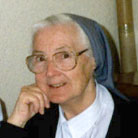
Prepare the future with lay people, invent new modes of presence
England/Ireland
66 sisters in 9 communities
England is becoming a multicultural society
Ireland is still a Catholic country, part of it is conservative and authoritarian while the other is more open and sides with the poor.
Challenges – disintegration of family life, drug addicts, homeless people, alcoholics, refugees and disoriented youth
Sisters’ main work – to be of help in parishes, to non-Catholics, to young people, to the poor and marginalised (often immigrants), to care for the elderly and to accompany Associate Members
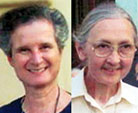
France
173 Sisters in 21 communities
France is becoming a more materialistic, multicultural society
Challenges – large areas of poverty, broken families, growing number of immigrants, increasing immorality and violence, and a rise in racism and fundamentalism.
Sisters’ main work – institutions (schools and retirement homes), in small insertions where there are new kinds of poverty, involvement in parish, charitable and social organisations, partnership with the laity and developing the Christian media.
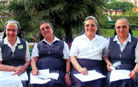
Greece – Cyprus – Bulgaria
The Greek province comprises these three countries – 40 sisters in 8 communities
Greece is greatly influenced by the Orthodox Church and its politics. Catholics a tiny minority
Challenges – decreasing human and Christian values, fanaticism
Sisters’ main work – education, ecumenism and in the newly emerging forms of poverty – refugees, immigrants, the most deprived, drug addicts, the aged…
Cyprus has a large number of foreigners, the Orthodox Church is powerful and authoritarian, the Maronite Church is equally authoritarian, the Latin Church is considered a foreign Church
Sisters’ main work – the service and reception of immigrants and political refugees, catechesis and parish work, support for students and the handicapped
Bulgaria, destroyed by a communist regime, has a weak economy and high inflation. The present adult generation grew up under an atheistic regime
Sisters’ main work – education in faith for the development of the people, through catechesis for children and adolescents and subsequent contact with families and their numerous needs
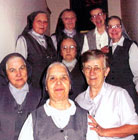
Italy
145 sisters in 20 communities
This Province is also responsible for the delegation of Romania
Challenges – an increasing number of immigrants, corruption, mafia, drugs, unemployment, disoriented youth, drug abuse, AIDS, consumerism, an ageing population, prisoners, prostitution especially among young foreign girls
Sisters’ main work – houses for the elderly and schools, the handicapped, the abandoned and the marginalised
Romania
4 Sisters in 2 communities
The Greco-Catholic Church finds it difficult to take its place along side the Greek Orthodox Church, but dialogue is taking place.
Challenges – difficult economy, lowering of moral standards and of truth, a simple faith that consists mainly of devotions
Sisters’ main work – sharing the life of the people, direct and indirect evangelisation, attentiveness to the poor, ecumenism, reception of students, the ministry of vocations.
Malta
69 sisters in 7 communities – joined with the Province of Tunisia
A Catholic country where the economic and cultural situation is changing rapidly.
Challenges – safeguarding of family values, secularisation, drugs, alcohol, violence…
Sisters’ main work – education, young girls in difficulty, social works and interaction with lay people